 Auction
 What Are the Best Secure E-Waste Strategies?
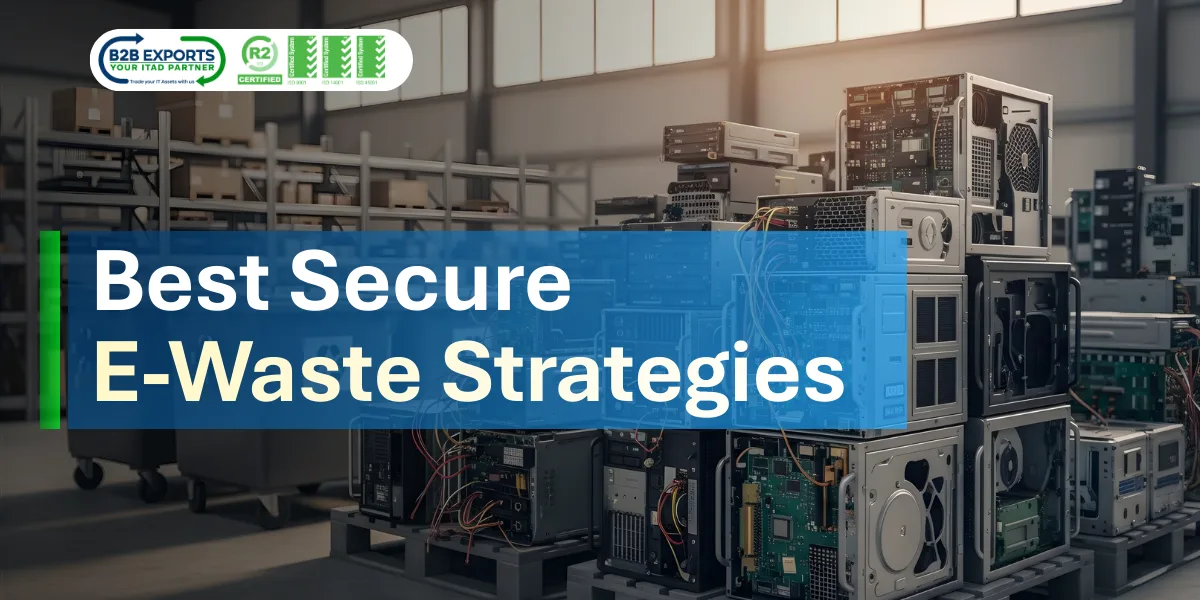
Modern technologies are constantly developing. New devices, advanced software applications and improved infrastructures all serve to change how companies operate and compete on an international scale. The tools previously considered to be essential are soon outdated. Businesses plan replacements, accept improvements and continue to move forward in the direction of innovation. But there's one issue that is often not given the same focus. What happens to older technology? The computers, servers as well as storage units are generally kept as operational remnants. They are stacked, stored or put aside to be used for "later to be disposed of."
However, these devices aren't completely safe. They still hold sensitive business information, such as financial records, customer information as well as login credentials and sensitive files. Without a safe disposal procedure, such assets could be a serious risk. Security breaches, compliance issues, financial losses and also reputational damage typically start with a simple error like an unintentionally handled device. Secure e-waste management is more than just cleanup or recycling. It is an essential element of security compliance and risk control. A well-planned strategy will ensure that outdated technology doesn't turn into a liability that is not visible.
Why Secure E-Waste Disposal Demands Serious Attention
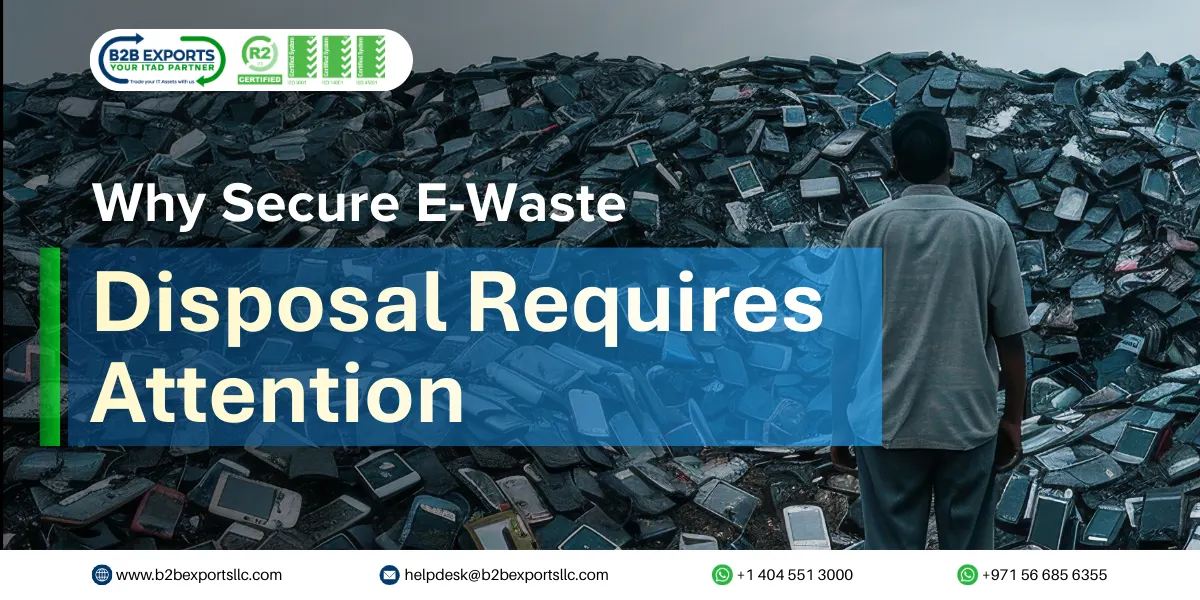
Many businesses believe that when you delete files or format a device, the data is gone forever. This is an extremely dangerous belief. In fact, even when you "erase" it (that's to say format it), the data usually just gets hidden. The data may still be stored on the drive. It’s usually possible to recover that data with simple tools. A seemingly dead device might still contain customers’ contacts, financial information, passwords and classified files. Even a single compromised storage device can lead to severe consequences. Sensitive business information can be leaked if it is not thoroughly scrubbed. The impact can be immediate and expensive. At the same time, regulations are also strengthening day by day. Now, data protection laws and environmental regulations demand that companies must responsibly manage their retired electronics. Improper disposal is no longer considered as a minor mistake. It could lead to audits, fines, legal trouble, as well as damage your reputation. Secure e-waste disposal protects what really matters the most. It keeps sensitive data safe. It supports compliance. It reduces environmental impact. Ignoring any of these areas will only increase the overall business risk.
What Truly Defines a “Best” Secure E-Waste Strategy?
The phrase “best strategy” can be confusing. Many businesses look for one solution that fits every situation. In reality, no single method works for all organizations. Every company has different needs. Risks vary with industries, regulations and business priorities that’s why, an e-waste strategy must be chosen carefully. Several factors shape the right approach. These include how sensitive the stored data is, what compliance rules apply, the condition of devices and financial goals. Strong e-waste strategies do not rely on just one action. They follow a clear and structured plan. This plan focuses on security, compliance and control. Reliable programs share common practices. They ensure certified data destruction. They maintain proper asset tracking. They follow legal and environmental rules. Many organizations also recover value. Devices can be refurbished, reused, or remarketed which reduces waste and improves returns. In the end, a “best” strategy is not universal. It is defined by how well it fits the organization’s risks and objectives.
Certified Data Destruction: The Non-Negotiable Core
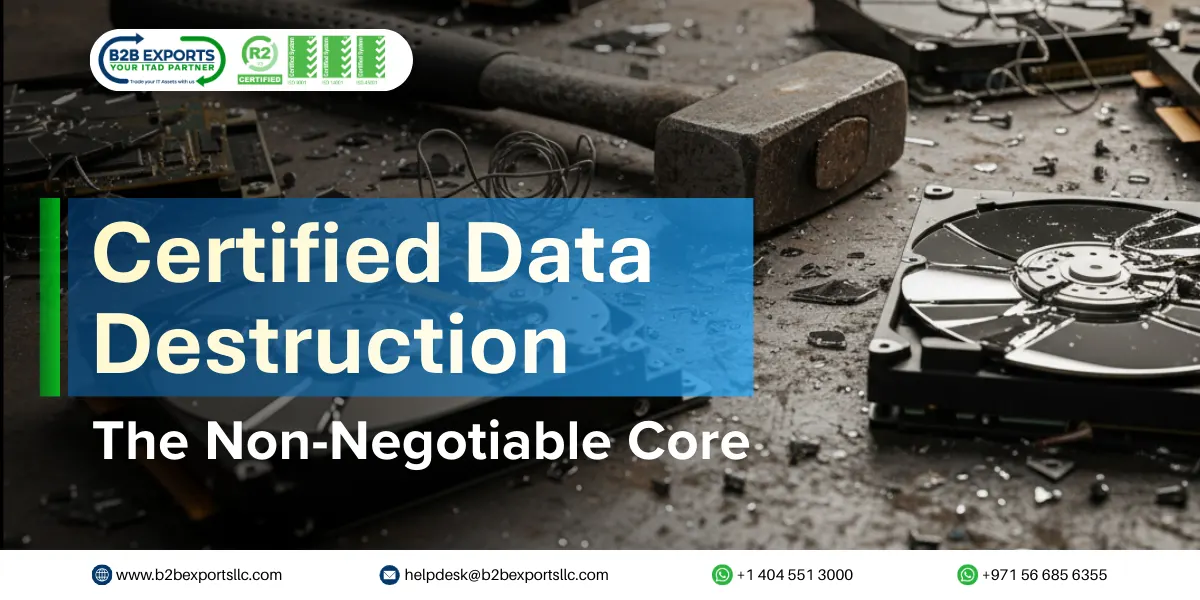
Data Destruction is the most important step in secure e-waste management. Before any IT asset leaves the organization, all stored data must be fully and permanently erased. There are two common ways to achieve this. The first is logical data erasure. This method uses certified software to overwrite the storage media. The second is physical destruction. This method includes shredding, crushing or degaussing. Logical erasure is a practical option when devices still have reuse or resale value. It removes sensitive information while allowing organizations to retain part of the asset’s worth. Physical destruction provides the highest level of protection. It is often selected for high-risk situations. This is especially true when handling damaged drives or highly sensitive data. Data destruction must always be certified. It must also be documented. Without proof of proper sanitization, every later stage of disposal can increase business risk.
Secure IT Asset Disposition (ITAD): Bringing Structure to Chaos
Secure IT Asset Disposition helps organizations handle retired technology in a clear and simple way. Many businesses still treat device disposal as a basic cleanup task. This can create problems in tracking, security and compliance. ITAD solves this by introducing a structured process. It brings together asset tracking, evaluation, secure data removal, recycling, remarketing and reporting in one workflow. This approach improves visibility and reduces risk. It also ensures that sensitive information is removed before devices leave the organization. In many cases, ITAD helps businesses recover value through reuse or resale. With this method, retired devices are no longer treated as clutter. They become part of a secure and traceable lifecycle.
Chain of Custody: Protecting Assets in Motion
Chain of custody is an essential element to any secure e - waste chain strategy. Data wiping is not the end of security. It persists at every step of asset management. They can be dangerous, even when a sanitized device is taken out of safe use and its usage tracked and properly recorded. Good chain of custody practices guarantee that every IT asset is tracked from pick up to its disposition. It can involve destruction, recycling and remarketing. A paper trail helps minimize loss of an asset, unauthorized access to files, data breaches and compliance disputes. And it gives businesses out-of-the-box evidence of responsible stewardship. At its most basic, chain of custody transforms an insecure hand-off into a disciplined and auditable procedure.
On-Site Destruction: Maximum Control for Maximum Risk
Onsite physical destruction is a secure way of disposing of e-waste. It's employed by groups that deal in highly sensitive data. Regulated industries do it as well. Carrying devices full of your data carries numerous risks with it. Once devices are removed from company property, they are also out of direct control. This can result in loss or unauthorized access. On-site destruction prevents this problem. Hard drives and other storage devices are shredded on site at the company’s facility. The process happens under supervision. It gives clear view and control. It reduces transport-related risks. It also supports compliance requirements. On-site destruction increases security and confidence for firms based in high-risk contexts.
Responsible Recycling: Where Security Meets Sustainability
It is essential to secure e-waste collection with responsible recycling. It helps defend data and the environment. As it turns out, your old devices aren’t just worthless hardware. Many still contain sensitive information, and if they fall into the wrong hands, serious threats may occur. Responsible recycling takes that threat off the table. Every device undergoes certified or secure data wiping. This happens before recycling begins. The process makes it impossible for anyone to view or use the data. It also reduces the risk of data breaches and legal fallout. They’re also disposed of in quantities customary for a certified recycler. They dismantle equipment carefully. They also recover valuable materials and handle unsafe components properly. Such an approach provides for both security and sustainability. It also leads to less pollution and landfill waste, which is friendly to the environment. And most importantly, it shows that data protection and sustainability can be allies.
IT Asset Remarketing: Unlocking Hidden Value
Not every retired device needs to be wiped or destroyed. Many IT assets still retain useful life and resale value. IT asset remarketing enables organizations to recover value instead of treating old equipment as a total waste. In a remarketing stage, devices are wiped of data. They are then tested, repaired if necessary and repackaged for resale. Protecting the data is the first priority. Certified erasure or destruction of data to ensure that no sensitive information is left on the device. After Data Sanitization, these assets can offer a real return. They have the ability to produce savings, decrease replacement costs and increase the efficiency of an organization’s IT budget. Businesses don’t throw away working equipment, they turn it into an asset. Remarketing also supports sustainability goals. It is contributing to the life of devices, lowering e-waste and promoting the circular economy. This is a win-win for the company and the planet. IT asset remarketing is a safe and advantageous strategy when it is managed by certified partners and safeguarded through stringent chain-of-custody controls.
Choosing the Right Strategy: Context Over Convention
There is no single solution for e-waste disposal. A perfect solution for one business can be a worst fit for another. The best strategy is determined by the situation, not by habit. Every business has its own combination of risks, regulations, infrastructure and priorities. The most reasonable place to begin is with data sensitivity. Companies in possession of sensitive, financial, medical or regulatory data usually prefer to physically destroy it. This method eliminates all room for data leakage to occur. But if you’re a business with less sensitive data, certified data erasure can be secure and suitable. It allows the reuse, recycling or resale of used devices without security risk.
The condition of the asset is very important. Profitable resale or repurposing of equipment that is still in working condition. Those broken, out-of-date, or just plain broken devices are probably best handled through responsible recycling. Assessing the condition of an asset helps avoid costly damage and develop more sensible recovery methods. Practicality is prioritized over security and asset integrity in all decisions. Alignment between the organisation’s security requirements, the regulatory framework and longer term business strategy is enabled by a context sensitive approach. Organizations should not rely on traditional processes, but rather on risk-based approaches, with asset, potential and responsible lifecycle management.
Conclusion: Disposal Is a Strategic Decision
E-Waste Disposal isn't just an IT Task. It is a business decision with far-reaching consequences. Each and every retired device compromises security, compliance, cost containment, sustainability and brand. Old hardware may seem safe, but it often contains valuable data and untapped potential. If we decide to dispose of without planning, the threats will escalate rapidly. A negligence case can be the cause of a data breach, regulatory fine or environmental violation. And what’s more, organizations can miss the opportunity to receive a value return from assets that are still working. A different scenario however is that a more pragmatic strategy modifies this outcome. Environmentally responsible recycling safeguards sensitive data and facilitates all-natural processing. IT asset remarketing services help in sale of the used assets to gain back some of their residual value, trash less and maintain budget targets. The idea of selecting the appropriate path by data sensitivity and asset health, thus striking the balance between security and return. Organizations that approach e-waste as a structured process have clear advantages. They minimize security risks exposure, remain compliant with requirements and support sustainability commitments. They also move away from reacting to disposal, to managing assets throughout their useful life. The end of use is not just disposal of a device. It is a moment of truth, influencing operational resilience, risk profile and long-term trust.