 Auction
 A Detailed Guide to Data Centre Decommissioning
Data Centre Decommissioning is a process of dismantling or shutting down the IT infrastructure in a data centre that is no longer in use. It has become an essential need for organizations as more advanced technology continues to evolve, businesses and enterprises are shifting towards cloud infrastructure. Whether a company is upgrading its tech system, centralizing operations or shifting completely to virtual platforms, shutting down the existing data centre with a structured approach becomes crucial as devices contain sensitive business information which can increase risks of data breaches and theft. A structured decommissioning plan protects sensitive business information, maintains compliance with essential standards and helps promote environmental sustainability through professional IT Asset Management practices.
Decommissioning does not just blindly shut down data centres but also carefully handles each device. As a part of the certified decommissioning process, each device undergoes secure destruction methods where all the previously stored data is completely erased using certified methods. This step involves managing hard drives by securely disposing of them using industry approved procedures. This is a crucial step under decommissioning to reduce the risks of heavy fines and legal penalties for not maintaining compliance with data security laws, helping organizations avoid reputational damage.
Additionally, a professional decommissioning service provider also helps organizations to recover maximum potential value out of retired IT assets. With the help of smart IT Asset Remarketing, organizations can reuse and repurpose old IT assets that are still functional. They use professional refurbishment to repurpose the devices and remarket them, helping organizations recover maximum value. Partnering with a certified service provider ensures that remarketing is done efficiently. However, those devices or components that cannot be remarketed are responsible sent for secure hard disk destruction to delete the sensitive data, while recycling hazardous materials and protecting the environment.
Why Data Centres Need to be Decommissioned?
Data centres are the most important part of today’s business operations. They need to be updated once they get outdated. Outdated data centres often work inefficiently and demand costly maintenance. This increases the need to update data centres. When servers, networking equipment and other storage systems no longer meet the performance or compliance requirements, organizations need to plan a detailed and structured decommissioning process. This is especially important for companies that use practices like IT Asset Management, ensuring every IT asset is properly tracked, maintained and retired at the end of life.
One of the major reasons why companies choose to decommission their outdated tech is when they choose to shift to cloud infrastructure. Organizations choose cloud environments than relying on physical hardware because it reduces energy consumption and maintenance costs. They also follow a secure Data Destruction process to remove previously stored data from the devices. Organizations also need decommissioning to maintain compliance with essential standards and regulatory compliance rules, ensuring safe handling of end-of-life IT assets while reducing the risks of data breaches.
Additionally, organizations use Data Centre Decommissioning practice to promote environmental sustainability. When a complete data centre is decommissioned, it provides various IT assets such as outdated assets, completely retired assets or assets that are still functional. All these assets are handled properly, assets that are still functional are sent for professional refurbishment and further resale through IT Asset Remarketing, helping organizations in unlocking residual value and reducing e-waste to protect the environment.
Planning the Decommissioning Project
Before starting the decommissioning process, it is important to properly plan the whole process. A structured decommissioning plan would help organizations to ensure a smooth decommissioning process. The process starts with auditing of all physical and digital components including servers, networking equipment and other components. A structured path is then created to set timelines, responsibilities and communication channels. This ensures that proper coordination is maintained and the decommissioning process is efficiently done.
A major part of this planning phase involves identifying each asset’s life span and prepare them for disposition. This is where ITAM comes into action by properly tracking each asset, maintaining it and finding whether the assets should be disposed or sent for recycling. This process is done before actually dismantling the assets. Proper planning ensures compliance with data security laws and other essential standards. All the assets are then categorized as per their condition and identify what can be resold, reused or recycled through certified processes such as IT Asset Remarketing.
The planning stage should also involve proper handling at important areas such as safely shutting down equipment, labelling devices, mapping out cables and identifying any data storage devices that must be securely destroyed using certified data destruction methods. Along with this, good backup plans are also essential to reduce the risks of downtime, safety issues or increased cost. A detailed plan helps the decommissioning process to be done in a safe, efficient and cost-effective way.
Step-By-Step Data Centre Decommissioning Process
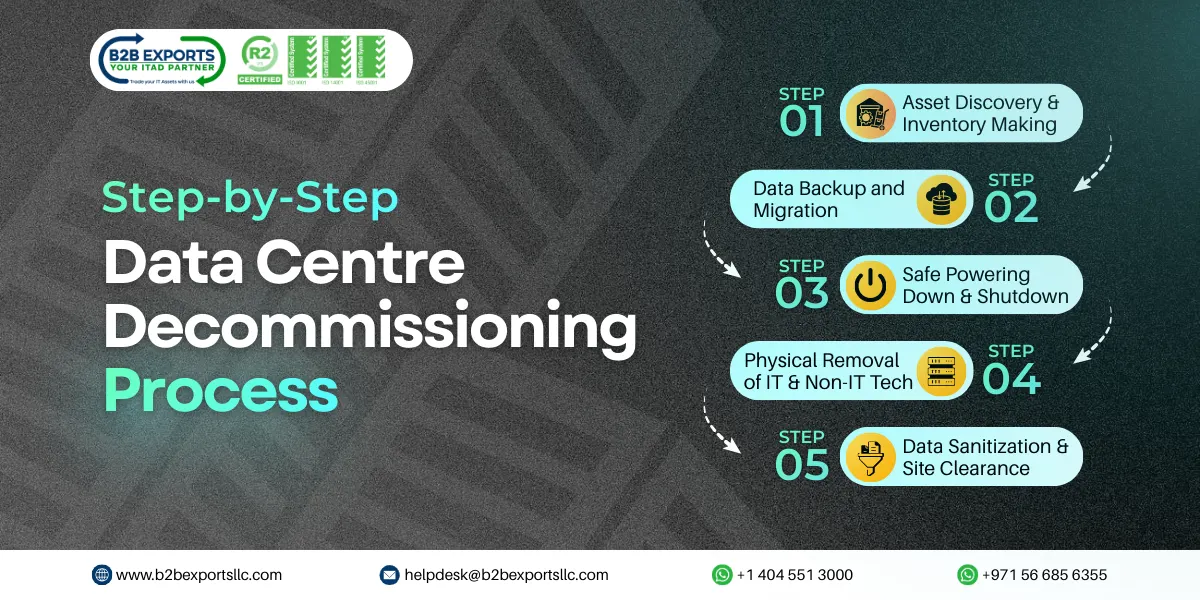
1. Asset Discovery & Inventory Making:
The first step which comes in the decommissioning process is to create an inventory of all assets and components in the data centres such as servers, network devices, storage units, cables, power equipment and security systems. Each device is listed with serial number, configurations and dependencies. This step helps in identifying what needs to be recycled, resold or securely destroyed. This ensures assets that are still functional can be reused by increasing their lifespan while hazardous assets are recycled to protect the environment.
2. Data Backup and Migration
Data backup is necessary to ensure that no important data is lost or theft in between the process. Before shutting down any system, its data must be transferred to a new infrastructure such as a cloud system or a hybrid. Backups help in preventing data loss and ensure that every critical information is stored. This ensures less disruptions during the process.
3. Safe Powering Down & Equipment Shutdown
Once the data is securely transferred to another infrastructure, assets can now be shut down using the manufacturer’s guidelines. Connected devices including network connections, cooling systems and backup power are also shut down using a controlled process to ensure maximum safety.
4. Physical Removal of IT & Non-IT Equipment
All the IT Equipment and Non-IT equipment are physically removed from the facility. This includes racks, servers, switches, cabling, UPS units and power distribution systems. This is done by specialized teams using safe handling process avoiding damage.
5. Data Sanitization & Final Site Clearance
All decommissioned devices undergo certified destruction process, ensuring all the important data is erased permanently. The final step includes cleaning the floor, removing cables and restoring rooms to repurpose or close the data centres.
Ensuring Data Security During Decommissioning
Protecting sensitive business information is critical to ensure complete data security during the Decommissioning process. When servers, storage devices and networking equipment are taken offline, they still contain sensitive information including customer personal information, financial information and operational data. This data must be handled securely as improper handling can lead to severe risks of data breaches, fraud activities and many financial losses. This is why proper planning is important while decommissioning data centres.
To ensure maximum protection, organizations must use a secure chain of custody where all assets and components including servers, networking equipment and storage devices are logged, tagged and transported under strict supervision. This helps in maintaining all assets and components correctly, reducing the risks of assets being misplaced or lost. Organizations must meet regulatory compliance requirements with recognized laws such as NIST 800-88 and ISO guidelines.
Additionally, secure Data Destruction is also followed by companies to ensure all the sensitive stored information is permanently erased using certified methods while maintaining compliance with essential standards. Hard disk Destruction is further followed for highly sensitive data. All processes must be documented properly including certificates of data destruction to ensure maximum transparency and peace of mind for the clients.
IT Asset Removal, Recycling & Disposal
IT asset removal is the critical step in the Data Centre Decommissioning process as it directly impacts security, compliance and environmental sustainability. When all the systems are securely powered down, the next step comes is to extract all components and IT assets including servers, switches, storage devices and other components. A structured ITAM ensures all devices are tracked, maintained and handled as per the industry standards. This helps the organization to prevent misplacement, unauthorized removal and transfer of sensitive hardware.
Once assets are removed, the next step is to identify and categorize them according to the value they hold. Assets that still hold some value and are functional are resold through IT Asset Remarketing. This helps organizations recover residual value from outdated assets, maximizing the utilization of assets through professional refurbishment. Devices that are no longer usable and do not meet performance level are securely processed through IT Asset Disposition. This helps preventing e-waste and essential equipment from entering landfills.
Security remains a top priority of organizations when disposing of IT assets through secure destruction methods. This is crucial to reduce the risks of data leaks or unauthorized access. Certified destruction methods include degaussing, data wiping, hard drive disposal and physical hard disk destruction like shredding for highly sensitive data. Additionally, recyclable components such as metals, plastics and circuit boards are responsibly recycled, reducing environmental impact and promoting sustainability.
Key Benefits of Proper Data Centre Decommissioning
Proper data centre decommissioning helps in financial, operational and security ways. One of the most important benefits is maximized data protection. A structured process ensures that all devices are handled carefully with strict controls. These devices are handled with secure data destruction practices which help organizations reduce the risks of unauthorized access and data exposure.
Another major benefit is the financial advantage that companies get through the proper data centre decommissioning process. Professional providers use smart IT Asset Remarketing practices to recover residual value from retired IT assets, helping organizations become smarter financially and recover maximum possible ROI from their initial investments. This helps in converting retired IT assets into revenue while reducing e-waste and promoting environmental sustainability.
Environmental sustainability is the other main advantage of the proper decommissioning process. When old devices are recycled using certified practices, the environmental impact is reduced. Decommissioning helps in removing unused IT infrastructure, minimizing power consumption and environmental impact. Additionally, integrating decommissioning into IT Asset Management practices helps in accurate inventory tracking, a strict chain of custody and complete visibility to every asset in the organization. Overall, effective data centre decommissioning helps in reducing risks, improving efficiency, supporting sustainability and long-term IT planning.
Common Challenges in Data Centre Decommissioning
Data centre decommissioning is not as simple as it sounds. While conducting a detailed decommissioning process organizations should be aware of challenges that they might face in between the process. The major challenge in the complete process is record of clear inventory. Many organizations fail to provide the updated record of all hardware, racks and supporting systems. This results in delaying as teams often need to search for some assets that are not in the list, identify ownership and figuring out other requirements. This might lead to costly mistakes.
Another major challenge is the risk of data breach or exposure. Outdated assets and components including servers, networking equipment and other storage devices still contain sensitive business information which must be handled responsibly. If these assets are not handled properly during the decommissioning process, organizations might face legal consequences for data leaks or security violation. Ensuring complete data security requires professional assets handling which some organizations lack, risking their sensitive data.
Additionally, logistics and asset handling are other challenges organizations might face. As data centres contain heavy equipment, which must be handled and moved carefully, ensuring safe transit. Always choose a certified provider who safely handles your assets. Budget constraint can also sometimes create rushed decisions, improper disposal and incomplete process which leads to inefficient decommissioning process. Lastly, choose providers who maintains compliance with environmental protection laws, ensuring a cost-effective, smart and efficient decommissioning process, while maintaining compliance with essential standards.
Best Practices for a Smooth Decommissioning Process
A successful decommissioning project requires a structured plan, right approach and better coordination between multiple teams. Applying the right best practice ensures that the entire process stays compliant and efficient. One of the most important practices is to start planning early and make a detailed plan to avoid confusion. This includes timelines, clearing responsibilities and identifying which devices or components will be retired. This helps in minimizing confusion and giving the complete team a clear direction.
The second-best practice is to perform a detailed and verified asset inventory before dismantling any device. Documenting all devices and components including servers, cables, switches and storage devices helps in tracking each asset and prevents the loss of critical component, ensuring assets that contain highly sensitive data are handled carefully. This helps in maintaining a detailed record of each asset and avoiding disruptions during the process.
The next best practice is to maintain a strict chain of custody for better visibility. From the moment assets are removed from racks to their destruction or recycling, every step must be logged. This helps in protecting organizations from legal penalties and help them maintain compliance with essential standards for data handling such as ISO standards. Always partner with certified decommissioning and ITAD partners to ensure a safer, faster and seamless process with complete transparency at every step.