 Auction
 The Environmental and Security Concerns of Secure Hard Drive Disposal
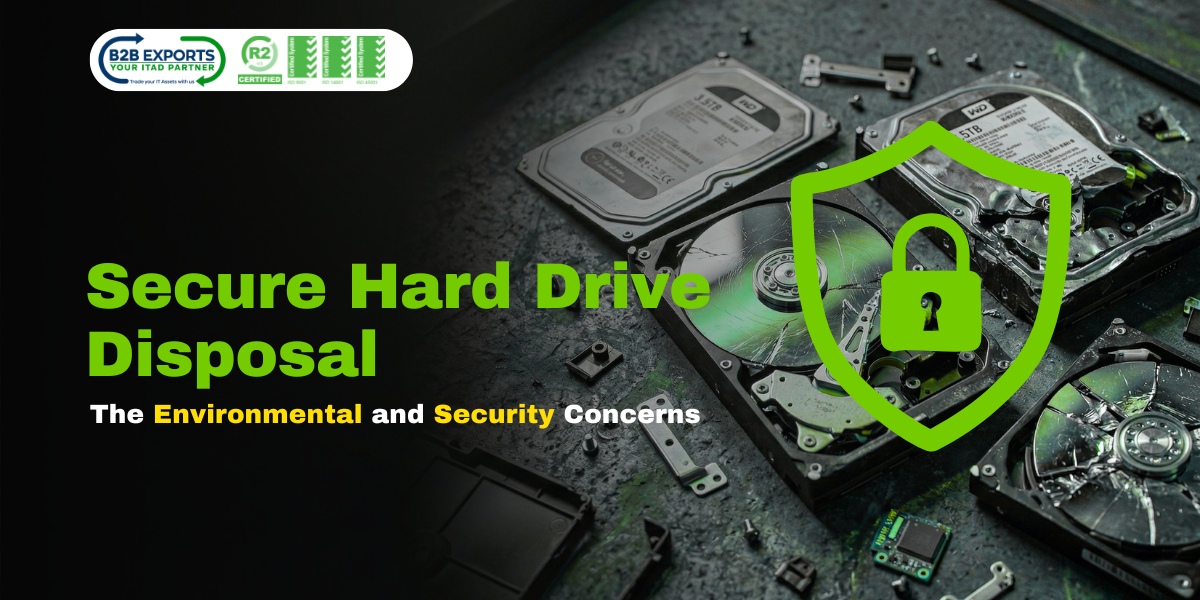
The rapid rise of enterprise technology has created a growing challenge for organizations throughout the world. As businesses have started to upgrade their IT infrastructure more frequently, the volume of retired hard drives is increasing at a fast rate. These old storage devices often contain sensitive corporate information and confidential data and if they are not handled properly, they can lead to serious cases of data breaches. At the same time, hard drives also contain valuable materials that can be recovered, making responsible disposal important from an environmental viewpoint as well. For organizations that are aiming to protect data and reduce their environmental impact, secure hard drive disposal has become necessary.
Organizations across industries are now recognising that disposing of hard drives is not as simple as discarding outdated equipment. It represents a meeting point of data security, compliance and environmental responsibility. From healthcare providers to financial institutions, the risks are high because even a single improperly disposed hard drive can lead to regulatory fines, reputational harm and legal action. The rise of strict data protection laws and increasing environmental awareness has turned hard drive disposal into a major organizational priority rather than a minor task. In accordance with regulations such as GDPR and HIPAA, organisations are required to follow strict rules for handling retired storage media and proving that data has been destroyed permanently. As a result, professional hard drive disposal services are considered as essential partners in managing these complex requirements in an eco-friendly way while also supporting value recovery wherever possible.
Why Secure Hard Drive Disposal is Non-Negotiable
The security risks associated with improper hard drive disposal move beyond theoretical concerns as they can be highly damaging in practical scenarios. Every hard drive can retain sensitive information even after simple reset actions, such as basic deletion or formatting. This creates a major security threat for organizations that do not follow certified IT data destruction practices as a part of their disposal process. To understand how serious the risk is, it is important to know how data stays on storage devices. In hard disk drives, data is stored magnetically and it often remains in place until it is intentionally overwritten using proper wiping methods. In addition, solid-state drives can be even more difficult to sanitize because wear-leveling technology may store data in hidden areas that standard operating system functions can’t fully erase. To face these complexities with ease, professional hard drive disposal services use certified methods for data destruction that are aligned with industry standards.
Regulatory bodies have also tightened requirements around secure hard drive disposal to reduce the resulting threats. For instance, GDPR expects organizations to apply strong controls to ensure personal data can’t be recovered when storage devices are retired from service. HIPAA requires healthcare providers to follow strict procedures for securely disposing of digitally stored health information of patients when it’s no longer needed. Ignorance towards these regulations can lead to expensive fines and long-term harm to the credibility of the company. The security advantages not only include regulatory compliance but also support business continuity and give competitive protection. Hard drives used in enterprise environments often contain intellectual property, confidential strategies of business and internal research.
Certified hard drive disposal companies protect organizations using strict security controls such as secure transport, monitored destruction facilities, well-trained staff and detailed audit documentation that indicates every stage was handled with precaution. Modern IT asset disposition programs have now started treating disposal of hard drives as a key step in managing data securely across every stage of the data lifecycle. Leading providers often maintain detailed tracking and reporting, thereby offering more visibility into where devices are, automated compliance reporting and verified certificates of destruction. As a result, companies can stay in control of both security and documentation throughout the disposal process.
Sustainable Hard Drive Disposal and Its Environmental Impact
The environmental harm caused by improper hard drive disposal is becoming a serious concern that not just affects companies but also damages ecosystems globally. Hard drives contain harmful components inside them which can break down over time and thus contaminate nearby land and water sources. A single enterprise hard drive may seem insignificant, but when millions are discarded every year, the environmental impact quickly becomes massive. Without responsible handling e-waste can turn into a lasting problem, exposing communities to major safety threats in the long-term.
The volume of e-waste waste that is derived from retired storage devices continues to increase. Significantly large quantities of hard drives are shipped globally on an annual basis and in enterprise environments, they are mostly replaced within just three to five years. Due to lack of adequate hard drive disposal programs, these drives end up either sitting unused in storage rooms or being handled using untracked channels. This further contributes to environmental problems and also causes precious materials to go to waste instead of being recovered or put back into use. When IT asset disposition is dealt with professionally it helps in secure handling and ensures controlled processes for recycling that focuses on maximizing value while staying compliant.
-
Recovering Valuable Materials
Certified services use specialized material recovery methods that are aligned with the principles of circular economy. Drives are dismantled so that different materials can be separated and processed correctly, such as aluminium components can be recycled and reused in manufacturing while rare earth magnets can be restored for reprocessing. In addition, circuit boards are sent through advanced recycling systems that help in extracting precious metals. With these methods, certified programs can divert a significant portion of a hard drive’s total mass away from landfills.
-
Reduction in Carbon Footprint
The sustainability benefits of handling hard drives responsibly are more than just keeping them out of landfills. Manufacturing new hard drives requires both significant power and sourcing of raw materials. By reintroducing usable materials, organisations help in reducing the need to extract new resources and lowering their impact on the environment. Partnering with a certified hard drive disposal company allows enterprises to fulfil data security needs while also contributing to reduction in carbon emissions and more sustainable IT Asset Management.
Selecting and Partnering with Professional Hard Drive Disposal Services
Choosing the right hard drive disposal company is an essential decision, which directly impacts an organisation’s security and compliance standing. A reliable partner should offer more than basic disposal services and have the required expertise in aspects ranging from IT data destruction and security controls to clear regulatory knowledge and environmentally responsible practices. The best providers are always transparent about their processes and backed by recognised certifications, handling both small and large scale disposal requirements.
Certified for Safety and Environment
Certifications are a reliable way to know that a disposal provider follows trusted practices. ISO certifications show that the company maintains high standards in operations and is considerate about the environment. R2 certification further complements these and adds confidence that recycling is done responsibly, data is protected and worker safety is ensured. Choosing a hard drive disposal company with multiple certifications keeps organizations assured that both security and sustainability is taken seriously.
Security Protocols
A professional provider must ensure that every step is secure, keeping track of hard drives from the moment they leave the facility until their destruction is completed. Reliable vendors use trained staff with verified backgrounds who handle equipment carefully. Transportation is considered to be secure when it includes GPS tracking and storage compartments are completely locked to prevent theft or loss. Along with restricted access and continuous video monitoring, visitor entry must be regulated at their facilities. Most importantly, the destruction process itself must follow proper documented procedures with quality checks to make sure all data is completely removed.
Service Standards
Service flexibility also matters at the time of building a long-term partnership. The IT environment of enterprises is constantly changing, with the amount of equipment needing a retirement shifting depending on technology upgrades and business expansion. A strong IT asset disposition provider should be able to support both routine pickups and urgent bulk retirement without compromising or neglecting the security standards. They should also have the capability to handle different types of devices, ensuring your organization has a single reliable partner for managing IT asset disposal.
Integrating Hard Drive Disposal into IT Asset Management
In mature IT environments, secure hard drive disposal isn’t just a separate task and is considered to be an essential part of the overall IT asset management strategy. Effective management covers the entire lifecycle of IT assets, from procurement and deployment to active use and retirement. The IT asset disposal is one of the most critical phases that results in either realizing leftover value from devices if handled responsibly or creates liabilities through poor practices.
Today’s IT asset management platforms make it easy to tie hard drive disposal into the overall lifecycle. They efficiently maintain detailed inventories of each storage device with information regarding serial numbers, capacity, location and their operational status. Once a device reaches the retirement criteria because of age, heavy use or even refresh cycles, the system automatically starts processes for handling it safely and securely.
While drives containing highly sensitive information may require physical destruction, many devices can also be erased in a secure manner using certified data destruction. As a result, it leaves the data unrecoverable while preserving the hardware for resale purposes. Professional ITAD services assess each device for determining the correct approach, whether it is remarketing, Data sanitization or destruction. This helps in deciding the appropriate way for retiring each device while unlocking value that would otherwise be unused.
The Grey Market Threat in Hard Drive Disposal
Disposed Drives Reappearing in the Market
One of the most underestimated risks in hard drive disposal is the issue of the grey market, where retired drives end up back in circulation instead of being securely destroyed or recycled in a responsible manner. This often happens when organizations either depend on informal routes or unverified vendors who focus more on resale value than on data security. In many cases, drives that should have been disposed of using certified processes are sold in bulk as used IT scrap and later refurbished, repackaged for selling through secondary markets.
Risk of Data Recoverability
The major concern is that even if a drive seems to be empty, the data which is stored on it may still be recoverable if it has only been formatted or partially erased. This is because the organization loses its control over where it goes and who ultimately handles it. Even if the data is not misused immediately, the possibility that the data could be recovered is enough to create compliance concerns, internal investigations and result in expensive damage control. In many cases, companies are forced to treat it as a potential breach, leading to unnecessary disruption in operations and increased legal exposure.
Ensuring Secure Tracking and Verified Disposal
Hard drives can also re-enter the market due to weak tracking practices, where devices are misplaced or mishandled during storage and transportation. Without proper visibility, it becomes difficult to confirm whether every hard drive has actually reached the final disposal stage. However, re-entering in the circulation is not always a risk, as many drives can be resold if they are first sanitized through certified methods for data wiping. This is why professional hard drive disposal providers make use of strict handling processes and certified wiping or destruction methods. In addition, they provide documentation to ensure that every device is either destroyed with security or made safe for reuse.
Conclusion: Final Thoughts on Secure Hard Drive Disposal
The environmental and security benefits of secure hard drive disposal have become essential for organizations operating in today’s world where dependence on data is high. Secure hard drive disposal is no longer a small IT task that can be handled at the end of an upgrade cycle. As it plays a direct role in protecting sensitive data and fulfilling responsibility towards the environment. At the same time, modern storage technologies continue to evolve, thereby increasing both the capacity and complexity of hard drives. As organizations are managing massive storage systems, the risks that are tied with improper handling grow significantly. Professional hard drive disposal services come with required experience, facilities and certified processes, which are needed to reduce these risks and ensure secure disposal is carried out completely.
In the coming years, the ability of an organization to integrate secure disposal into IT asset management strategies will indicate their maturity in technology governance. Leading companies recognize that disconnected lifecycle practices often create inefficiencies and gaps in meeting compliance, leading to serious security risks. By using a unified approach for IT asset disposition organizations can protect their investments while maintaining clear and traceable operational accountability. As regulatory requirements continue to change and environmental expectations keep growing stronger, enterprises that have well-established hard drive disposal programs will be in a better position to adapt fast and stay compliant.