 Auction
 The Shift Towards Structured ITAD in Enterprise Risk Management
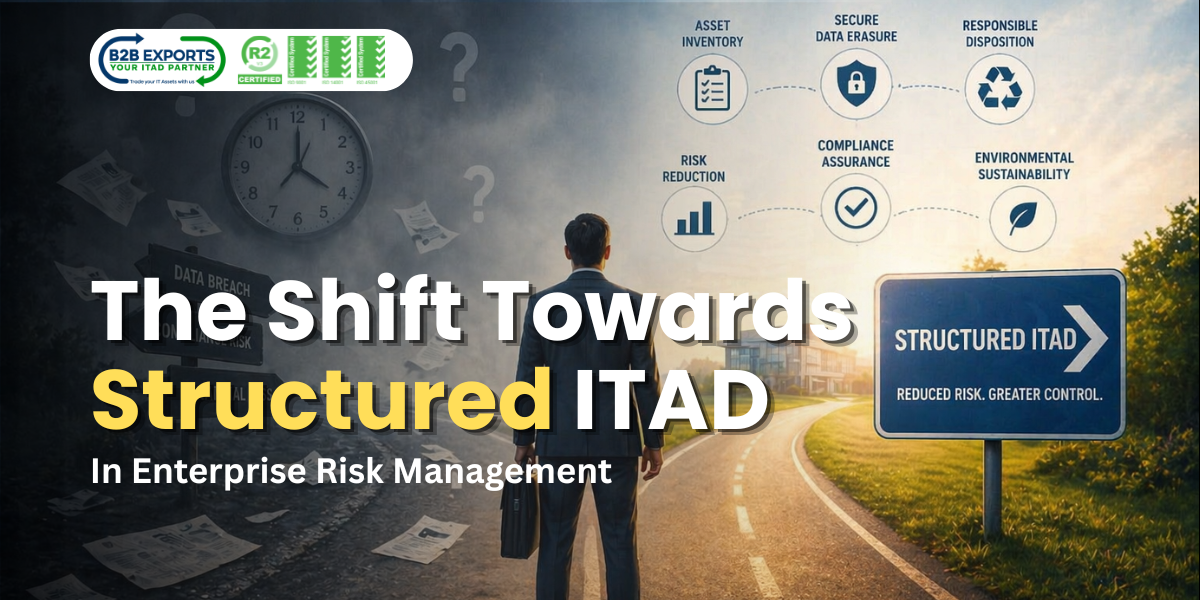
No matter your enterprise, IT equipment will at some point become old, underpowered or obsolete. Servers are replaced, laptops are retired and storage drives are decommissioned. For years, this phase was treated as a back-office activity by many organizations, a step to be checked off quickly with minimal oversight. Now that model is insufficient and enterprise leaders have also started to see and acknowledge these kinds of risks more than before. Growing awareness about data security, compliance requirements and environmental accountability is influencing the way organizations retire IT equipment. There was a time when this was considered an informal process, but now it is treated as a strategic discipline. IT asset disposition (ITAD), the organized process that involves retiring, managing and disposing of IT equipment securely and responsibly, has now become a recognized component of enterprise risk management structures.
This huge shift is driven by real-world consequences. Data breaches traced back to improperly discarded drives, regulatory penalties for disposing of sensitive equipment without meeting necessary compliance standards and reputational damage linked to e-waste violations have all highlighted the risks. These are no longer isolated incidents but cautionary examples that have pushed CIOs, CISOs, IT managers and compliance teams to treat IT asset disposition as an important function of risk management rather than considering them as a basic handling task. At the same time, IT environments have become more difficult to manage as most businesses suddenly have dispersed workers and assets across so many different places. It is no longer simple to keep track of devices approaching end-of-life, which is why the majority of organizations rely on well formed ITAD processes that help bring visibility, control and consistency.
Why Unstructured Disposal Is a Risk Enterprises Can No Longer Afford
For a long time, the disposal of outdated IT equipment was handled informally. Devices were donated, sold to employees or passed to third-party vendors without proper documentation or verification. In some organizations, retired hard drives were stored in closets or warehouses for extended periods, neither reused nor securely disposed of. While this approach may have seemed convenient in the short term, it created long-term exposure that many organizations are only now beginning to fully organize.
-
Leftover Data on Retired Devices Risks Exposure
The most significant risk in unstructured disposal is data erasure. Every retired laptop, server, desktop, and storage device may still contain residual information, often including confidential business data, customer and financial details, or confidential intellectual property. Without certified data destruction, this information has a high chance of remaining recoverable even after the device leaves an organization’s proximity and control. This vulnerability is widely known and improperly discarded enterprise hardware is frequently targeted for data recovery and misuse.
-
Compliance Requires a Structured Approach
Data security is only part of the issue; regulatory accountability matters as well. Organizations in various sectors like legal, government and financial are required to comply with regulations that extend to the retirement and disposal of IT equipment. HIPAA, SOX and GDPR are such regulations that clearly communicate the expectations regarding how data- bearing devices shall be dealt towards the end of their life. Even unintentional noncompliance can lead to monetary penalties and legal problems. Without a proper IT asset disposition process, showing compliance during audits becomes far more difficult.
-
Responsible Disposal Protects Environment and Reputation
One must surely consider the environmental aspect here. Improper disposal of e-waste leaves you susceptible to significant legal liabilities in many countries and the problem will only get worse as more governments adopt more stringent rules regarding electronic waste. Moreover, organizations that are unable to demonstrate responsible approaches risk damaging their reputations in an era in which clients, investors, and the general public closely scrutinize sustainability commitments.
Put it all together, these risks make one point clear: unstructured IT disposal is not a cost-saving approach. It is a liability generating one.
Certified Data Destruction: Essential to a Secure ITAD Process
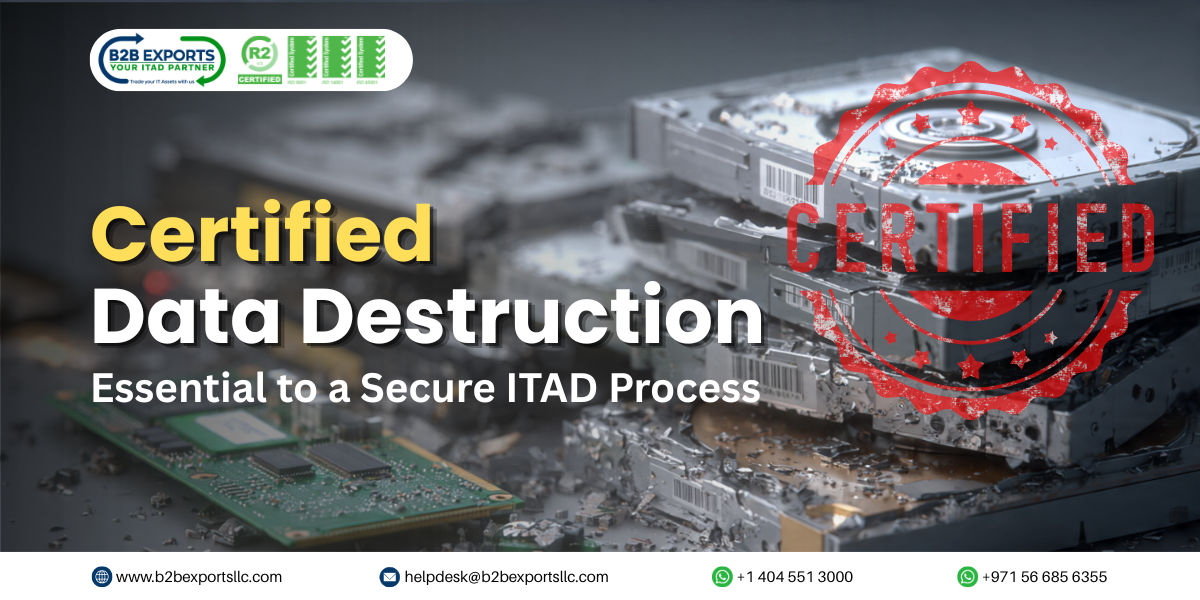
Of all the components that form a reliable IT asset disposition program, certified data destruction is the one that cannot be compromised. It directly addresses the most severe risk: sensitive information being accessed through unauthorized entities after a device is out of the organization’s control. Without performing this step, even well-planned initiatives for ITAD leave organizations exposed to potential data breaches as well as several challenges for meeting the compliance requirements.
-
Basic Deletion Isn’t Enough for Data Security
Standard methods used for deleting the data often leave the scope for information to be recovered through widely available tools. Even a full format does not guarantee that the data is completely removed. True certified data destruction involves applying validated techniques, such as software-based overwriting, degaussing or physically destroying the drives, that permanently eliminate data as per the recognized standards for keeping the data secure. A certificate of data destruction then plays the part, confirming the method applied and documenting that the process was successfully completed.
-
Storage Devices Carry High Risk If Mishandled
Hard drive disposal is known to carry significant risk. This is because hard drives hold large quantities of critical and confidential information. Alone, a decommissioned server may contain several drives holding terabytes of organizational information. Similarly, batches of retired laptops across a large enterprise can represent significant exposure if not handdled in the correct manner. For this reason, certified destruction of storage media is treated as a main step in a mature ITAD program rather than a secondary consideration.
-
Certified Destruction Supports Compliance
For regulated industries, certified data destruction is not only about reducing risk, but it is also about meeting compliance obligations. Healthcare providers are required to ensure that health information is safely taken out of devices as and when they are retired. Financial institutions are also required to meet strict controls when disposing of systems that may contain crucial records, while government contractors typically operate under even tighter expectations towards security. In all these environments, documented evidence of certified data destruction is essential to reflect accountability as well as commitment towards regulatory requirements.
-
Secure Data Destruction Builds Operational Confidence
Apart from laws and regulations, certified destruction also provides operational confidence. When leadership, legal teams and compliance officers know that retired devices have been securely processed and documented, organizations can proceed with technology refresh cycles and decommissioning initiatives without carrying unresolved risk. That assurance helps in strengthening governance, reduces uncertainty and supports more controlled management of the IT lifecycle.
Key Elements of a Structured ITAD Program That Enterprises Should Look For
Building or implementing a structured program for IT asset disposition involves a lot of essential components. Therefore, the organizations that understand these elements are better equipped to evaluate service providers, establish internal workflows and align expectations with stakeholders across various teams belonging to departments, such as IT, procurement and compliance.
Complete Asset Tracking and Inventory Management
Every ITAD program begins with accurate asset tracking. This requires maintaining a current inventory of all IT assets, including location, assigned users, data classification and lifecycle status, within a dependable IT asset management system. Without this foundation, gaps can appear in the retirement and disposal process.
Defined Data Handling Protocols
Not all devices should be handled the same way. A properly structured ITAD program establishes clear protocols based on data sensitivity. Devices that are at high risk require certified ways of data destruction, while others may qualify for secure data erasure. These decisions allow predefined policies rather than being made informally each time.
Full Visibility into Where Assets Go
Each device entering the ITAD workflow should be tracked through every stage, be it collection, transportation, processing and ultimate disposition. Chain-of-custody documentation creates accountability and provides the audit trail required for compliance as well as internal governance.
Partnership with Certified Vendors
Enterprises that take assistance from external providers should confirm that the company shows compliance by established certifications, namely ISO 14001, e-stewards and R2v3. These credentials serve as a guide that the provider adheres to tested environmental, operational and data security benchmarks.
Certificates of Data Destruction and Disposal
At the end of the process, organizations should receive certificates confirming what assets were processed, the method of destruction applied and the date when the process was completed. These documents provide evidence that can be formally used for compliance programs, audits and legal requirements.
IT Asset Remarketing Where Appropriate
Not all retired IT equipment must be destroyed. Devices that no longer meet internal needs may still be able to hold usable value. IT asset remarketing, the resale or redistribution of properly refurbished equipment, enables organizations to recover any leftover value while reducing unnecessary wastage. When this approach is put across in the right manner, this component can help in offsetting the overall cost of an ITAD program.
ITAD as a Strategic Advantage Beyond Compliance
The conversation about IT asset disposition has matured greatly in recent years. It once started primarily as a compliance-driven requirement and is now being recognized as an area where enterprises can demonstrate strategic leadership and stronger operational governance.
Delivers Real Financial Value
Organizations that implement structured ITAD programs are not simply avoiding risk, they are creating measurable benefits that extend across various areas of the business. Taking the financial perspective into consideration, a properly managed ITAD program that includes IT asset remarketing can generate tangible returns through the resale of retired equipment. Across a large volume of devices, these recoveries can represent a meaningful offset against the cost of future technology upgrades and refresh cycles.
Sustainability Goals Are Strengthened
As far as sustainability is concerned, structured ITAD contributes directly to environmental commitments. Properly handled IT asset disposition ensures that devices are either refurbished for reuse or recycled through certified channels, rather than being directed towards landfills or informal waste streams. For organizations that have publicly committed to reducing environmental impact, this is not a secondary initiative. It is an operational requirement and enterprise leadership is paying closer attention to whether sustainability goals are supported by real execution.
Reflects Organizational Trustworthiness
Structured ITAD demonstrates original maturity to clients, regulators and business partners and this aspect is equally important. When an enterprise can show that it maintains a documented and auditable process for handling retired IT assets, including data security, environmental compliance and value restoration, it indicates that its approach to risk management is proactive rather than reactive. Additionally, procurement in competitive environments, especially in sectors where compliance and data protection are very crucial, this extent of governance increasingly becomes a differentiating factor.
The shift toward structured IT asset disposition within enterprise risk management is not temporary. It reflects how enterprise risk itself is involved and how organizations that take it seriously are building more resilient, trustworthy and sustainable operations for the long term.
Conclusion: Why Structured ITAD is Now a Business Necessity
The time when decommissioned IT equipment was treated as a minor operational issue has passed. As data security risks continue to increase, regulatory expectations become even more strict and sustainability commitments gain importance, IT asset disposition has moved from a back-end activity to a core element of enterprise risk management. Organizations can no longer afford to handle retired devices informally or without clear oversight. Every laptop, server and storage drive leaving the environment represents potential exposure if not managed using an organized and documented process.
A well-defined ITAD strategy provides the framework that the organizations require to handle this responsibility effectively. Accurate asset tracking ensures increased visibility across the lifecycle. Certified data destruction helps in eliminating the risk of residual information exposure. Documented chain of custody maintains accountability during handling and transport. Compliant hard drive disposal supports regulatory requirements, while responsible asset remarketing helps recover value and minimizes underutilization and loss of reusable value. All such factors help in contributing towards shaping a controlled as well as defensible approach to retiring IT assets. Rather than asking if ITAD is needed, the question for decision makers is now “how soon can we take action?” There has been a transition from wondering whether ITAD belongs in the enterprise risk management vocabulary to how quickly organizations can establish appropriate processes that secure data, facilitate compliance and boost operational resilience.