 Auction
 The Complete E-waste Recycling Process
E-waste recycling has become one of the most important practices in today’s modern world where technology is growing drastically. Organizations adopt new technologies to keep themselves updated with current tech systems and manage their operations effectively. This has made e-waste recycling even more important in today’s era, minimizing environmental effect and promoting sustainability. E-waste recycling is the process of collecting, dismantling, separating, processing and recovering valuable materials from the outdated assets. It conserves resources along with preventing harmful materials such as lead, mercury from entering the landfills.
Every year, millions of tons of electronic waste are generated globally which makes it a fastest growing waste concern. Organizations rely on IT asset management and disposition for the correct disposal of them at the end of their life. ITAD helps organizations securely process their retired IT assets, protecting the sensitive data with certified data destruction methods while maintaining compliance with international standards. It also helps in reducing global warming by extending life of IT assets and minimizing manufacturing of new devices to some extent.
As organizations continue to expand their infrastructure, the need for e-waste recycling will also increase as organizations would be consuming more electronic devices. By partnering with a certified ITAD company, organizations can effectively contribute to environmental sustainability by reducing e-waste, maintaining data security and recovering maximum potential value from the retired IT assets. E-waste recycling not only protects the environment but also helps organizations to unlock residual value.
What Counts as E-waste?
1. Consumer Electronics:
Consumer electronics including smartphones, laptops, tablets and wearable devices such as smart watches and smart glasses are an important portion of global e-waste. These devices contain valuable materials such as gold, copper and aluminium which makes them necessary to be recycled. If these devices are not recycled properly then they release hazardous chemicals, affecting the environment. These devices can be further refurbished with responsible recycling, reducing landfills and promoting sustainability.
2. Office IT Equipment:
Organizations use IT equipment across every sector, producing millions of tons of e-waste annually through retired IT devices such as desktops, laptops, servers, printers and other storage devices. ITAM helps in managing these assets throughout their lifecycle and gets them properly disposed of at the end of their life. These office assets contain highly sensitive data including critical business information which makes secure data destruction necessary. Proper recycling of these devices helps in preventing the environment from harmful materials and extracting usable components for further use.
3. Telecommunication & Networking Devices:
Telecommunication and networking devices such as routers, modems, hubs, switches, WAPs and other devices are used in almost every organization. These devices contain metals, PCBs and various plastics which must be recycled properly. If not recycled responsibly, they can release harmful substances which affect environmental sustainability. Proper recycling not only helps in protecting the environment from harmful substances but also recovers residual value for organizations from retired devices.
4. Industrial & Medical Electronics:
The Healthcare industry generates a vast amount of electronic waste through automated systems, diagnostic machines, smart control boards and several lab equipment. These electronic devices often contain hazardous materials which must be handled responsibly. These devices are specially recycled using certified dismantling techniques while maintaining compliance with essential standards. Further, valuable materials are extracted from these devices, reducing costs for the institution and safely disposing of harmful substances.
5. Batteries & Power Storage Devices:
Lithium-ion laptop batteries, smartphone batteries, power banks, UPS and solar power storage units are considered as harmful e-waste. These devices can release harmful chemicals if not recycled properly. When these devices are properly recycled, then substances like lithium, cobalt and nickel are recovered which can be further used to make new batteries, minimizing costs expenditure and preventing natural resources from entering landfills.
6. Cables, Components & Circuit Boards:
Components such as cables, PCB boards, adapters, wires and other such devices are considered as e-waste. These devices contain gold, copper, silver and other useful materials which can be extracted with the help of responsible recycling. This ensures that useful materials are safely extracted while preventing the environment from toxic substances and promoting environmental sustainability.
Why e-waste recycling matters?
Every organization uses different technologies nowadays in every industry. All organizations from all the industries want their systems to be fast and automated to perform the operational tasks effectively. The number of electronic devices has increased drastically which makes it important to responsibly dispose of retired or outdated devices by recycling them responsibly. Proper recycling not only helps in minimizing environmental impact but also extracts useful components found in electronic devices, such as gold, copper, aluminium and other components.
E-waste recycling helps in preventing harmful materials such as mercury, lead and cadmium from entering the landfills. These materials produce harmful substances after mixing up with soil and water. So, it's better to recycle them and prevent them from meeting water and soil. E-waste recycling creates opportunities for refurbishing functional devices which helps in repurposing outdated devices. These refurbished devices are remarketed through IT asset remarketing, helping organizations extract residual value from old tech. This helps organizations safely dispose of their retired tech while generating maximum value out of it. The ITAD Summit frequently highlights the importance of R2v3 compliance for safer, more responsible IT asset management.
Additionally, e-waste recycling helps in reducing carbon emissions by minimizing the need for manufacturing new devices. Efficient recycling processes consume less energy as compared to manufacturing new components from raw materials. IT asset disposition plays an important role here by increasing asset utilization through professional refurbishment and allowing assets to be reused, which reduces the carbon footprint to some extent. ITAD helps in creating a greener environment by using refurbishment, recycling and reuse, making valuable contributions to environmental sustainability.
Collection, Transportation & Initial Sorting
1. Collection Channels and Sources:
E-waste collection process starts with collection of old electronics through several channels such as stores, city drop-off channels and special pickup programs. All the old and outdated assets are securely collected in this step and are safely processed for further recycling, ensuring less environmental impact and promoting sustainability.
2. Secure Packaging and Handling:
The next step which comes after secure and safe collection is their packaging and handling. All the assets are safely packaged according to their hazardous level. Critical components like lithium batteries and broken screens are specially packaged, ensuring the highest level of handling. Proper documentation is also provided to maintain transparency. This ensures that devices reach proper recycling without damage.
3. Transportation to Recycling Facilities:
E-waste is further transported using certified vehicles and maintaining full compliance with environmental standards, reducing the risks of fire or any mishappening. Advanced transportation also uses barcode and tracking systems, monitoring every movement. This provides highest level of transparency to ITAD partners, meeting regulatory compliant and maintaining client’s trust.
4. Pre-Sorting and Categorization:
After the assets are securely arrived at recycling facility, the first step is to sort them. Professional trainees help sorting these assets into computers, batteries, cables, wires and peripherals. Sorting helps determine device’s condition and finds out whether these devices should undergo, refurbishing, IT asset remarketing or dismantling. Proper classification helps in increasing efficiency and enhances material recovery quality.
5. Condition Testing and Evaluation:
Before dismantling, devices are tested by professionals to determine whether they can be repaired or resold. Devices that can be refurbished are separated from the devices meant for full recycling. This helps in extending the lifecycle of IT assets, adding valuable contributions to the circular economy, creating opportunities for reuse and value recovery.
6. Hazard Identification and Extraction:
Devices that contain hazardous components are separated for safe treatment. Components such as lithium batteries, mercury lamps, tubes and toner cartridges. It is important to handle such devices with care as improper handling of these devices can cause fire and cause severe environmental impact. This helps in safely disposing hazardous materials, protecting the environment and maintaining compliance with environment safety rules.
Data destruction and secure handling of IT Assets
1. Software Based Data Wiping:
Data wiping is a process of removing existing data on devices using a software. In this method, data is overwritten multiple times using different patterns each time. This makes data unrecoverable even with the help of advanced data recovery tools. This method is suitable for the devices that are still in working condition and can be repurposed for further use through IT asset remarketing. Data wiping is an important part of ITAD as it helps in protecting sensitive data while allowing the device for further reuse and promoting environmental sustainability.
2. Hard Drive Shredding for Maximum Security:
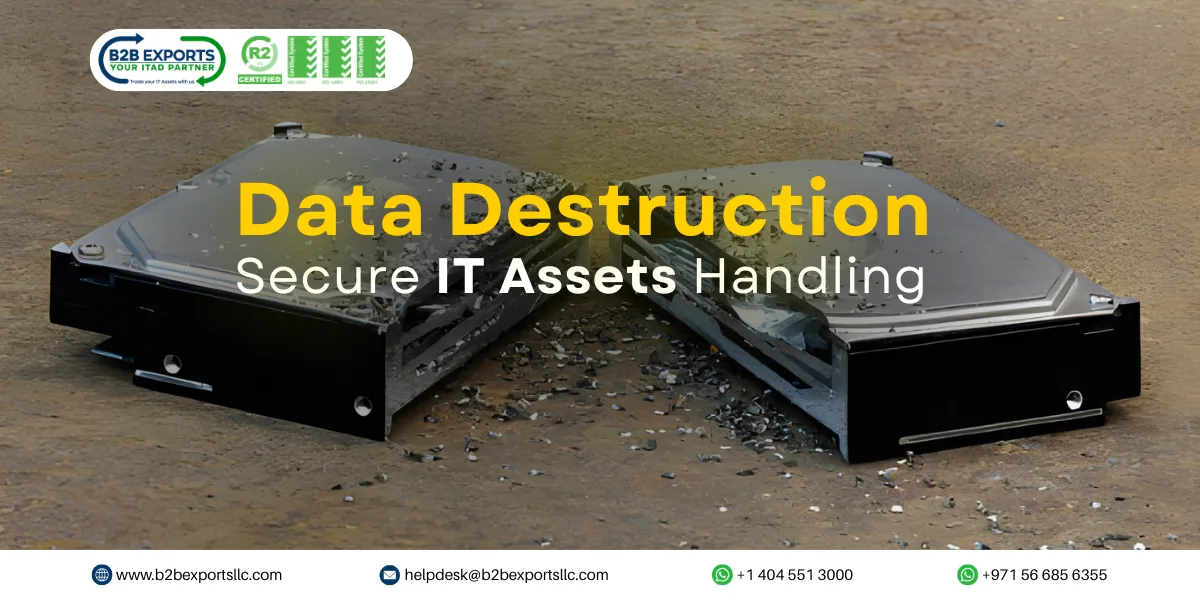
Hard drive shredding is a physical data destruction method where hard drives are crushed into small parts, ensuring that these parts cannot be assembled and data is erased permanently. This method provides maximum data security and is best suited for sectors like finance, defence and healthcare. Valuable metals are then extracted from the destructed drives.
3. Secure Hard Drive Disposal:
There are still some devices left that cannot be wiped or shredded on-site, for those devices hard drive disposal is the best solution. The drives are transported for secure hard drive process while maintaining full compliance with environmental standards. Secure hard drive disposal ensures complete data protection and reduces environmental impact. Essential documentations including certificates of destruction are provided for maximum transparency.
4. On-Site Data Destruction Services:
Many businesses don’t feel safe to handover their used assets for IT destruction and want that data is destructed in front of them. On-site data destruction helps to destroy sensitive data at the client’s location for maximum data security. The complete process is done using certified tools like mobile shredders and other wiping equipment. This method is especially useful for the organizations handling more sensitive data. This method provides the maximum level of security ensuring sensitive information cannot leave the premises in any condition.
5. Chain of Custody Documentation:
Proper documentation helps in providing transparency and maintaining trust among clients. Each device is assigned a unique barcode and asset IT which helps tracking all the movement of assets. All the assets are continuously updated and monitored to reduce risks of asset or data loss. This not only helps in protecting data but also ensures compliance with essential standards like R2v3, GDPR and other ISO standards.
6. ITAD and Global Warming:
IT asset disposition helps in reducing global warming by extending life of IT assets and encouraging for their reuse. This helps reduce manufacturing of new devices to some extent. Manufacturing of new devices consumes much more energy as compared to refurbishing and remarketing. ITAD helps in reducing carbon footprint with the help refurbishing, contributing positively to the environmental sustainability.
Dismantling and Material Recovery Techniques
1. Manual Dismantling of Components:
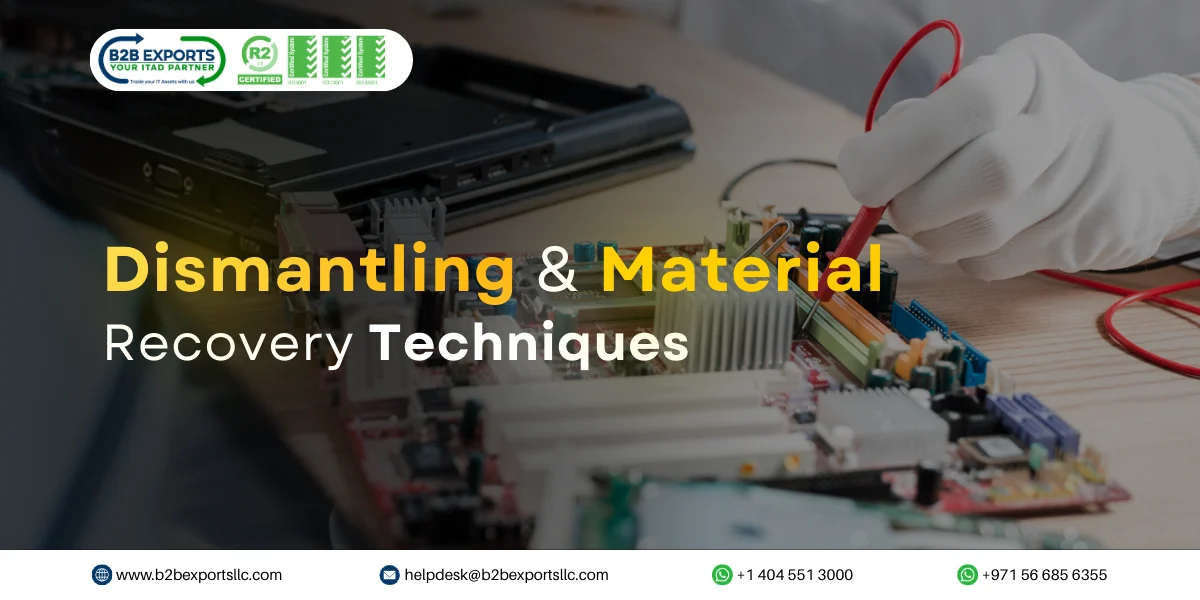
Valuable components are extracted manually by certified technicians which helps in separating components from devices. Components such as circuit boards, wires, plastic covers, drives and batteries. Manual dismantling helps in separating valuable parts and safely remove hazardous materials. Manual dismantling of devices helps in preventing many valuable components.
2. Mechanical Shredding of Electronics:
After successfully dismantling the components, remaining materials are shredded into smaller pieces. Shredding allows for efficient material separation during downstream processes. It helps in handling large volumes of e-waste while successfully extracting valuable metals and plastics. Proper shredding not only help in optimizing energy usage but also allow for mechanical sorting.
3. Magnetic Separation for Ferrous Metals:
Shredded material is passed through powerful magnetic forces to extract ferrous metals such as iron and steel. Once these metals are extracted, they can be recycled repeatedly without losing quality. It improves the purity of recovered metals and helps in reducing carbon emissions as recycled iron and steel consumes less energy than producing new metals.
4. Metal Sorting Using Eddy Currents:
Non-ferrous metals such as copper, brass and aluminium are extracted using eddy current technology. These metals are the most valuable metals and can be used in various industries. Eddy current technology increases recovery rates and reduces reliance on mining operations. These resources can be reused which helps in conserving natural resources and preventing environmental from degrading.
5. Plastic Recovery and Reprocessing:
All the plastic generated from e-waste is reprocessed after sorting and cleaning. Recycled plastics can be further used to make new electronic casings, construction materials and other industrial components. This helps in preventing plastic from going into landfills and lowering manufacturing energy consumptions. Advanced sorting techniques ease the process of plastic recycling with high accuracy.
6. Precious Metal Recovery from Circuit Board:
Circuit boards often contain valuable metals such as gold, silver, platinum and palladium. These valuable metals are extracted using thermal and chemical processes. This process helps in reducing the need for mining which is an energy-intensive and environmentally damaging process. This process helps in reducing environmental impact and promoting environmental sustainability.
The future of e-waste recycling: Trends and Innovation
The future of e-waste recycling is being shaped by new technology advancements, strict regulations and global sustainability rules. Technology should also be advanced with the rising use of electronics. One of the most impactful trends is the AI powered sorting system which identifies materials and sort them more accurately. Robots are also taking the devices apart, dismantling them and helping recyclers handle complex devices easily.
Another major development is the adoption of modular and repairable devices by large number of organizations. These components are easier to update, repair and most importantly recyclable. This helps in longer use of electronics and repurpose at the end of their life, reducing e-waste entering the landfills while allowing for maximum utilization of devices. Additionally, ITAD providers are focusing majorly on refurbishing and IT asset remarketing, helping organizations utilize IT assets to their full potential and reducing carbon emissions.
Governments are also implementing Extended Producer Responsibility (EPR) laws, encouraging organizations to take post-consumer waste responsibility. This is shaping recycling frameworks impactfully. High value materials are also extracted from discarded devices through urban mining, conserving valuable resources. By staying updated through platforms like the ITAD Summit, businesses can adopt smarter and more sustainable ITAD strategies. With the increasing global warming, the role of ITAD is becoming extremely important. ITAD helps in reducing carbon footprint by recovering materials, promoting reuse and reducing landfills.