 Auction
 Planning IT Asset Lifecycles For Better Cost and Security Operations
Every laptop, server and storage device in an organization follows a journey. It starts with procurement, moves into daily use, continues through years of operation and eventually reaches a stage where maintaining it no longer makes sense. What happens throughout this journey is what IT Asset Management is really about, yet many organizations still don’t approach it in a structured or effective way.
It is often assumed that IT asset management is about keeping records, knowing what assets exist, where they are located and updating that information when something changes. Considering the reality, this is only an initial look at a much deeper issue. Good IT asset management is an ongoing activity that shapes how you make purchasing decisions, plan budgets, manage security and stay compliant. When managed the right way, it helps in reducing costs and lowering the risk of data exposure. However, if it is managed in an improper manner, it leads to significant gaps that can cause inefficiencies and unexpected risks.
This blog looks at how organizations can manage their IT assets in a way that is thoughtful and structured throughout their lifecycle. Instead of simply tracking devices, the main focus is on managing them actively, from the moment they are acquired to the point where they are securely retired. It focuses on five major areas that involve keeping a clear and exact record of all assets, knowing when it's time to retire equipment, handling data securely at the end of the lifecycle, getting back value via remarketing and working with the right partners to manage the process smoothly.
Building a Complete and Accurate Asset Inventory
It’s very hard to manage something that you don’t fully see, yet many organizations operate without a clear and up-to-date view of their IT assets. Devices are sometimes deployed without proper records, moved between teams without updates or left in storage while still marked as active. So when leadership asks for a total count of devices or an auditor requests an inventory, the answer is often uncertain.
-
Start with Building a Complete Picture of Your Assets
A strong IT asset management approach begins with creating a complete and accurate record of every asset in the environment. This goes beyond just laptops and desktops, it also includes servers, networking equipment, storage systems and even peripherals. Each asset should be tied to a record that captures main details such as specifications, purchase date, assigned user, location, software licenses and maintenance history. When this level of detail is maintained, the inventory becomes more than just a list; it becomes a useful management tool. -
How an Accurate Inventory Makes Everyday Work Easier
The benefits of this asset inventory become visible in a short time. Procurement teams can make smarter purchasing decisions when they know what is already available. Finance teams can plan budgets and depreciation more accurately. Before devices can start causing problems for end-users, IT teams are able to identify those that are reaching the limit of their lifecycle. Security teams may also identify systems that are unpatched or not patched, which in turn helps control surface risk across the network. All of this is meaningless unless the inventory is updated and considered an ongoing, regularly maintained document.
-
Better Asset Data Leads to Stronger Vendor Conversations
Organizations that maintain strong inventory discipline also find it easier to negotiate with vendors. When you have clear data on what assets you own, when they were purchased and when warranties expire, you are in a stronger position during renewals or upgrades. In the end, good decisions rely on good data and that data comes from taking IT asset management seriously from the start.
Establishing Clear Lifecycle Timelines and Retirement Criteria
One of the most unrecognized methods of controlling IT costs is making pre-made decisions about when an asset should be retired. While many companies continue using equipment until it fails, this tends to cost more. Old hardware still needs maintenance; it takes up IT resources and eventually becomes a security risk as manufacturers stop issuing updates or support.
Plan Lifecycles from the Start
To do planning more effectively, lifecycle timelines need to be defined at the procurement stage itself. A lifespan of three to four years is normal for most enterprise laptops and desktops, while servers and storage systems typically last five to seven years in terms of usage. These timelines have to be recorded and kept under review on a regular basis so that by the time a device nears its expiry, it is planned out well in advance with respect to replacements, allocation of budget and disposing of it without any hindrance.
Older Systems Mean Higher Risk
From a security perspective, this approach is equally important. Older systems are often more vulnerable, as they may run outdated software or lack critical updates. By retiring devices on a planned schedule, organizations can reduce exposure to such risks and maintain a more secure IT environment.
Data Sensitivity Should Guide Decisions
Considering the kind of data managed by each device is essential as well. Systems employed in heavily regulated sectors such as banking or legal services might require replacement sooner because of the greater impact a potential data breach could have. Lifecycle planning that considers both hardware age and data sensitivity leads to improved risk understanding and better management decisions for an organization.
Securing Data at the End of an Asset’s Life
The end-of-life stage is where IT assets carry the highest level of risk and unfortunately, it is also where mistakes are more likely to happen. Once a device leaves the organization’s direct control, whether it is moved to storage, handed over to a vendor or transported off-site, any remaining data on it can quickly become a serious liability if not handled properly.
Why Certified Data Destruction Matters
It makes the data disappear, but does not go deeper than that; deletion or formatting a device does make it look like it's gone. That information, in many scenarios, is still retrievable with professional recovery software, even from devices that appear wiped or partially damaged. These are tried and tested methods that can eliminate this risk completely and should be followed up with best practices, which include degaussing, use of NIST 800-88-compliant data wiping or physical destruction of the storage media.
Certified data destruction ensures that the process is conducted by a qualified provider and every device is recorded and tracked individually. Each asset is logged and a certificate of destruction is provided, detailing what was destroyed, how it was processed and the date of completion. If the organization is subject to regulations such as GDPR or HIPAA, then this form of documentation is mandatory, you must be able to prove that your data practices are responsible and compliant.
Hard Drive Disposal: A Step That Demands Attention
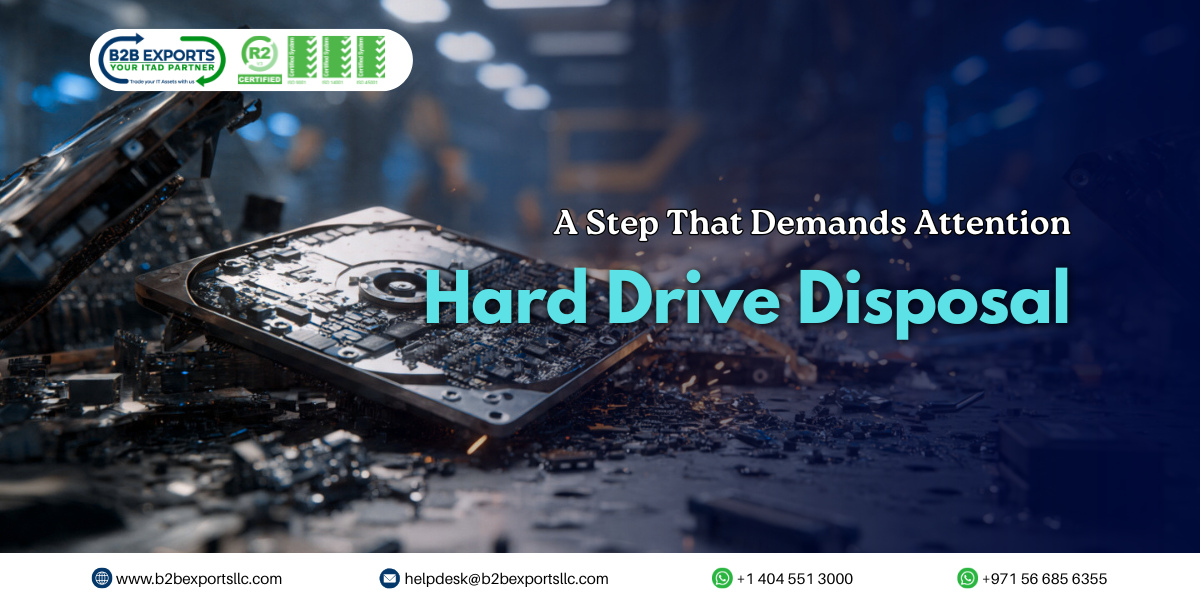
Hard drive disposal is one of the most sensitive parts of the entire lifecycle and should never be treated as a routine step. Whether it is a traditional hard drive or a solid-state device, these components can store large amounts of sensitive information, from financial data and customer records to internal business information and credentials.
For end-of-life hard drives, there should be a defined process in place by organizations. This involves logging each drive individually, tracking serial numbers, verifying the method of destruction and providing appropriate documentation. Devices targeted for reuse or resale must be certified as fully erased before any such proof will be produced. If a drive cannot be securely wiped due to damage or failure, it is better to destroy the device than facing the risk of exposure to any residual data.
Extending Asset Value Through Strategic Remarketing
Retiring IT equipment doesn’t always mean it has no value left. Many devices that are no longer useful within your organization can still be in demand elsewhere. IT asset remarketing is simply the process of reselling this hardware, either directly or through a specialist partner to recover some part of the investment that was initially made instead of letting it go to waste.
Which Assets Qualify for Remarketing
Not every device will have a resale value, but a large number do. High-quality enterprise devices, including workstations, servers and laptops from leading manufacturers, often continue to hold market value even after their internal lifecycle ends. Other equipment like storage devices, networking hardware and components, can also find buyers in markets where businesses look for cost-effective alternatives to new hardware.
That said, one thing is non negotiable: all data must be completely removed before any device is resold. This is where data destruction and remarketing come together. The same certified data erasure process that ensures compliance also makes it safe to pass the device on to a new user. Without proper removal of data, remarketing is simply not a responsible option, no matter how much value the device holds.
How Remarketing Reduces the Cost of Ownership
When remarketing is planned from the very beginning instead of being handled at the final stage, it can have a significant financial difference. Devices that are retired on time are usually in a better condition, which helps them in retaining higher resale value. The money recovered can help in offsetting the cost of new hardware, supporting IT asset management efforts or reducing the budget required for future logistics.
Organizations that assume their retired assets have no value often miss out on this opportunity. A more structured approach to remarketing, whether handled internally or through an ITAD partner, thereby shifting disposal from a cost burden into an opportunity to recover value.
Working with the Right IT Asset Management Services Partner
For organizations with large and complex environments, managing the sheer volume of IT asset lifecycle end-to-end can become a burden. Whether it is procurement and inventory tracking; lifecycle planning; secure data destruction; or hard drive disposal and remarketing, every aspect requires time, expertise and clearly defined processes. That’s why so many organizations have opted to engage a trusted external partner who can assume some or sometimes all of these responsibilities more effectively.
The right partner doesn’t just help with execution, they bring structure and credibility to the process. A qualified ITAD provider, for instance, will typically be holding certifications like R2v3, ISO and more. These certifications are, in a way, an indicator that reflects these processes are properly abided by data security and environmental responsibility. More importantly, they provide proof when regulators, auditors or clients ask how data was treated at the end or how equipment was ultimately disposed of, this documentation thereby becomes your proof.
Going further, a good partner also ensures visibility improvements throughout the lifecycle. Regular audits, scheduled retirements and detailed reporting allow organizations to better visualize their IT landscape as well as facilitate financial planning. In the long run, such a structured approach can minimize total costs while increasing security and compliance goals.
Conclusion: Working with the Right ITAM Services Partner
The IT asset lifecycle is often overlooked, yet it has an important role in both cost control and risk management. The actual value doesn’t come from one single decision, but from consistently managing every stage, from buying and setting up IT assets to using them, retiring them and disposing of them, all handled as one smooth, connected process.
When done well, IT asset management gives organizations good visibility into what they own, helps them in deciding the right time for retiring the equipment and ensures that data and hardware are handled properly at the end of their lifecycle. IT also creates the documentation needed for compliance, opens up opportunities for recovering costs and reducing potential security risks.
Organizations that get this right aren’t always the largest or use the most advanced technology. They’re the ones that treat IT assets as important throughout their complete lifecycle, not just at the beginning or when something goes wrong. That way of thinking is what ultimately results in better outcomes.